
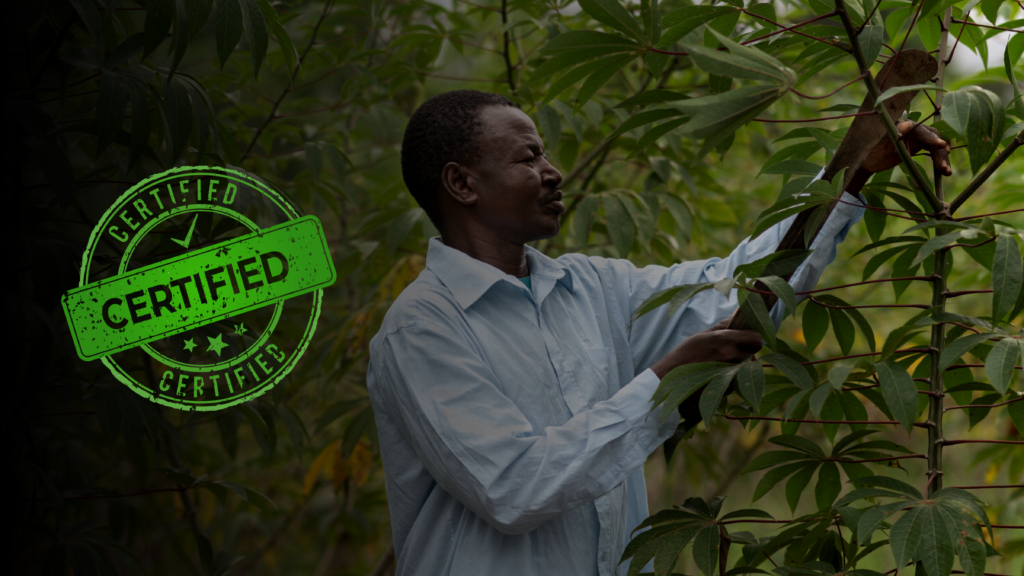
A few years back, we sat down with sustainability managers from a major Nigerian agro-export company. They were recounting their experiences preparing for certification audits, and you could hear the exhaustion in their voices. “It’s just… draining,” one of them said. “Every single time.” Sure, no one really enjoys being audited, but their stress went beyond normal audit anxiety. After talking for a while, the real issue became clear: it wasn’t the audit itself that was the problem—it was how impossibly difficult it was to pull together the documentation they needed. Farm data lived in field officers’ notebooks. Training records sat in scattered Excel files. GPS coordinates existed somewhere in old KoboToolbox forms. When audit season arrived, they’d spend 6-8 weeks manually compiling everything, only to discover gaps at the last minute. And this wasn’t unique to them. Having spent over 10 years working directly with Nigerian cocoa and palm oil farmers—organising more than 100 training sessions and supporting over 10,000 farmers across Ondo, Cross River, Edo, and Delta states—we’d seen this pattern everywhere. Excellent work happening in the field, but invisible when it mattered most. The problem wasn’t farming. It was connection.
Three Problems Everyone Was Living With
The visibility gap came first. Field officers collected meticulous data in rural areas, but that information took weeks to reach headquarters—if it made it there at all. Exporters managing thousands of farms couldn’t answer basic questions without days of manual work: “How many farms are EUDR-compliant right now?” “Which farmers completed training this quarter?” The data existed, scattered across notebooks and systems, but it was effectively invisible. Farmers trained for certifications but had no way to track their own progress. Everyone was working blind.
Then there was the annual audit scramble. Like clockwork, every certification cycle brought the same chaos. Staff members would drop everything for weeks, hunting through notebooks, cross-referencing Excel versions, compiling training sheets, and manually verifying GPS coordinates. Even after all that effort, gaps remained—not because the work wasn’t done, but because proving it required archaeological excavation of scattered records. The frustration wasn’t about compliance standards being too high; it was about administrative systems being too broken.
And finally, the tools didn’t fit the reality. We watched exporters try expensive global software platforms built for European farms—systems that assumed reliable internet, desktop computers, and supply chains nothing like Nigerian smallholder networks. These tools either sat unused or required so much customization they became unaffordable. The choice felt impossible: expensive platforms that didn’t work, or affordable spreadsheets that couldn’t scale. Neither option actually solved the problem, so people kept struggling with manual processes because at least those were predictable.
Building the Bridge That Was Missing
INTA exists because after a decade of manually connecting farms to certification standards—literally being the bridge between field data and compliance requirements—we realized we could automate what we’d been doing by hand. What if field officers could update data on mobile devices, even offline, and have it sync automatically when connectivity returned? What if scattered information from notebooks, Excel files, and KoboToolbox could flow into one organized system? What if GPS coordinates could instantly transform into visual compliance maps instead of requiring manual cross-referencing with Google Earth? What if generating audit documentation took hours instead of weeks?
That’s what INTA does. It connects the disconnected pieces of agricultural supply chains—field officers to exporters, scattered data to unified intelligence, Nigerian farms to global standards. It works the way Nigerian exporters actually work: integrating with KoboToolbox and Excel (tools already in use), functioning offline when needed, and priced at ₦2 per farmer per year instead of millions. We didn’t set out to build software. We set out to solve a problem we’d lived with for 10 years: excellent agricultural work trapped in invisible, disconnected systems. INTA is the connection layer that was always missing.
What We’re Building Toward
Here’s the future we’re working toward: a Nigerian exporter confidently answering EU buyers’ sustainability questions in real-time instead of scrambling for weeks. A smallholder farmer checking their progress toward certification on their phone and knowing exactly what’s left to do. A field officer watching their training data sync instantly to headquarters, seeing their work matter immediately instead of disappearing into administrative black holes. Audit season becoming routine instead of crisis mode.
Nigerian agriculture doesn’t need fixing—it needs visibility. Farmers are already doing world-class work. Exporters are already meeting global standards. The gap isn’t capability; it’s connection. When scattered data becomes unified intelligence, when excellent work becomes instantly provable, when Nigerian farms connect seamlessly to global markets—that’s when everything changes. After 10 years of creating these connections manually, we’re excited to see what happens when it scales. That’s what INTA is for: making sure the world can finally see the excellence that’s always been there.
Ready to see how INTA connects your supply chain? Book a demo.